Hotel Reputation Management: A Practical Playbook for More Bookings
Your hotel’s online reputation is selling rooms around the clock, whether you manage it or not. Every Google review, TripAdvisor rating, and Instagram guest photo shapes where potential guests decide to stay.
As you plan budgets and targets for the year ahead, this playbook covers how to monitor, respond to, and act on guest feedback across the platforms that matter, with reply examples, a weekly routine, and guidance on tools and services.
Key Takeaways
- Hotel reputation management means monitoring, responding to, and acting on guest reviews across review sites, OTAs, social media, and search engines.
- Research from the Cornell Center for Hospitality Research found that a 1-point increase in review score on a 5-point scale let hotels raise prices by 11.2 percent without losing occupancy.
- A 2017 study in Marketing Science found that hotels that started responding to TripAdvisor reviews saw a 0.12-star rating increase and 12 percent more reviews.
- Guest comments double as a free operational audit. Tag feedback by department, and you’ll know exactly what to fix.
- A 90-minute weekly routine is enough to keep most properties on track.
What Is Hotel Reputation Management?
Hotel reputation management, sometimes called hotel online reputation management, is the ongoing work of monitoring, influencing, and improving how guests perceive your property online. It ranges from replying to a single Google review to analyzing guest sentiment across thousands of online reviews for a multi-property group.
Effective hotel reputation management comes down to four actions:
- Listen to guest feedback across multiple platforms.
- Respond to reviews, positive and negative, promptly.
- Fix the real operational issues guests point out.
- Show improvements on your website, OTA listings, and social media.
The principles of hotel reputation management are the same for a 20-room boutique and a 20-hotel portfolio. The difference is scale: a single property can manage reviews by hand, while hotel groups need standard workflows and a central dashboard.
Why Reputation Is a Revenue Strategy
Reputation isn’t a PR exercise. A good online reputation affects your pricing power, occupancy, and direct bookings.
Chris K. Anderson’s study for the Cornell Center for Hospitality Research, The Impact of Social Media on Lodging Performance (2012), found:
- Using Travelocity data, a 1-point increase in a hotel’s review score on a 5-point scale allowed it to raise prices by 11.2 percent while keeping the same occupancy or market share.
- Using ReviewPro and STR data, a 1 percent increase in online reputation score was associated with up to a 0.54 percent increase in occupancy and up to a 1.42 percent increase in RevPAR.
A strong online reputation also improves your online visibility on OTAs and metasearch, builds guest trust, and gives travelers more confidence to book direct. Higher-rated hotels earn more clicks and reservations, and many booking sites let travelers filter out properties below a minimum rating, so a weak score can keep you out of the results entirely.
The takeaway: When you plan for more hotel bookings, reputation belongs in the same conversation as rate strategy, distribution, and digital marketing.
Where Your Hotel’s Online Reputation Lives
Your reputation is spread across review platforms you don’t fully control. Each one works a little differently.
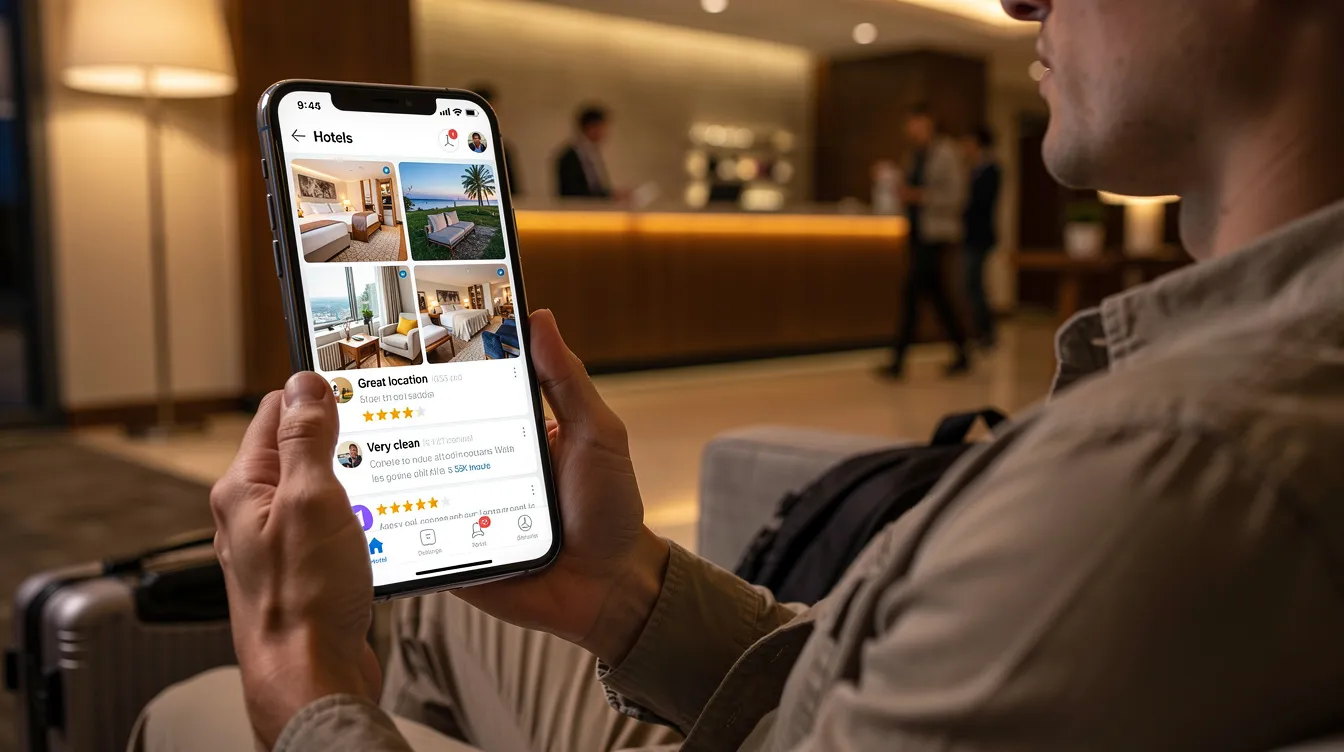
- Google Business Profile: Often the first thing travelers see. Google reviews and ratings appear right in search results, and Google is often a hotel’s highest-volume review source.
- TripAdvisor: Still a primary research tool for leisure travelers, and often the answer to “what is the most popular review platform for hotels” in many markets.
- Booking.com: Accepts reviews only from verified stays and shows scores on a 10-point scale.
- Expedia and Hotels.com: Verified-stay reviews with category ratings like cleanliness and staff.
- Agoda: Strong in Asia-Pacific markets, with verified-stay reviews.
- Yelp and other review sites: Yelp is more influential in North America, especially for on-site restaurants and bars, and anyone can post, not just verified guests.
- Instagram and TikTok: Guest photos and videos shape expectations, and a single viral clip can reach a huge audience.
- Metasearch and search engines: Pull ratings and photos from multiple online review sites into one view.
Your property’s online presence reflects all of these at once. How your hotel is perceived online depends on the whole picture, not any single platform.
Reputation Across the Guest Journey
Reputation isn’t only built after checkout. It’s shaped at every stage of the guest journey.
- Before the stay: Accurate listings, current photos, and clear policies set expectations. Pre-arrival emails answer questions before they become complaints.
- During the stay: Front desk check-ins, a quick in-stay message, and staff who resolve problems on the spot prevent negative feedback before it’s written.
- After the stay: Post-stay emails invite honest reviews and give you guest insights while the visit is fresh.
Guest data from your property management system and CRM ties this together. When you know a guest’s stay history and preferences, you can personalize service and follow-up, building engagement and loyalty over time.
Review Monitoring: Your Early Warning System
Daily monitoring catches problems while they’re still small.
- Check Google, TripAdvisor, Booking.com, and Expedia every morning, and turn on alerts for new reviews.
- Use a reputation dashboard to pull every channel into one feed once volume grows.
- For hotel groups, compare ratings and review volume by property to spot outliers early.
- Watch star ratings, guest photos, and social mentions, not just written reviews.
Example: Three guests mention noise on the same floor over one weekend. The front office manager spots the pattern Monday, routes it to maintenance, and finds an HVAC unit vibrating against a wall. One repair prevents the next ten noisy room complaints.
How to Respond to Hotel Reviews
Responding works. Davide Proserpio and Georgios Zervas studied TripAdvisor hotel reviews in Marketing Science (2017) and found that hotels that began responding saw a 0.12-star increase in ratings and a 12 percent increase in review volume.
Your review response isn’t about winning the argument. It’s about reassuring the future guests who’ll read it months from now. A thoughtful response to a negative review often says more about your excellent customer service than a page of five-star ratings.
Aim to respond within 24 to 48 hours. Use the guest’s details, stay calm and factual, and avoid copy-paste replies.
Noise complaint
“Thank you for letting us know about the noise during your stay. We hosted a private rooftop event that evening, and we understand it affected rooms on the upper floors. We’ve since moved event end times earlier and added sound barriers. Please reach out to our front office manager at [email] so we can make your next stay quieter.”
Missed housekeeping
“We’re sorry housekeeping missed your room. That’s below our standard, and we’ve reviewed the schedule with our housekeeping supervisor. We’d like to hear more about your stay, so please contact us directly at 941-259-4554.”
Check-in delay
“We’re sorry about the wait at check-in. Our lobby was at peak volume that afternoon, and we’ve since added a second station for weekend arrivals. Thank you for your patience and for telling us.”
Billing dispute
“Thank you for flagging the minibar charge. We’ve passed your details to our billing team, who will contact you within 48 hours. If the charge was made in error, we’ll reverse it right away.”
Glowing review
“Thank you for the kind words about our breakfast team and Carlos at the front desk. We’ll share your review with them. We hope to welcome you back soon.”
Reply to positive feedback too. Thanking happy guests by name builds customer loyalty and shows travelers you read every review.

Handling Fake or Policy-Violating Reviews
Every platform has its own policies and reporting tools, and no removal is guaranteed.
Warning signs: no matching reservation in your property management system, abusive language, an obvious competitor attack, or content that has nothing to do with a stay.
What to do:
- Reply publicly and calmly. Say you can’t match the review to a reservation and invite the reviewer to contact you directly.
- Report the review through the platform’s tools.
- Document everything internally.
Verified-stay platforms like Booking.com and Expedia see fewer of these. Google, Yelp, and other review sites accept reviews from anyone, so they need closer watching.
Never post fake reviews, pressure guests, or retaliate publicly. The FTC’s rule on fake reviews, effective October 21, 2024, bans fake reviews, buying or selling reviews, incentives tied to positive reviews, and review suppression. Violations can bring civil penalties.
Earning More Positive Reviews the Right Way
A steady flow of recent positive online reviews keeps your rating credible and softens the impact of an occasional bad one. Here’s how to encourage guests to share their experience ethically:
- Post-stay emails: Send review requests within a day or two of checkout with direct links to Google or TripAdvisor.
- Front desk asks: Train staff to invite departing guests to share their experience without conditions.
- In-room cards and QR codes: Point guests to your review profiles.
Never send review links only to guests you think are happy, and never offer anything in exchange for a review. Ask everyone to earn more positive reviews travelers trust.
Give guests a private way to reach you during their stay. A room service mix-up, billing question, or noisy room resolved in the moment often never becomes a public review.
Use Guest Sentiment to Fix Operations
Customer feedback is a free, detailed operational audit if you organize your review data. Tag every review by department and theme:
- Housekeeping: Repeated mentions of stained carpet on one floor point to a replacement job, not a one-off.
- Front desk: Long check-in lines every Friday evening point to a staffing gap, not a training issue.
- Food and beverage: Mixed breakfast reviews alongside strong praise for the bar tell you exactly where to invest.
- Maintenance: Recurring Wi-Fi complaints in one wing likely mean a dead zone.
Share a weekly summary with department heads, and bring the trends to your revenue meetings. Better service quality improves guest experiences and satisfaction, and Cornell research reminds us that higher scores support higher rates. Operational fixes are revenue decisions too.
Keep Listings and Photos Accurate
The fastest route to a bad review is a gap between what your listing promises and what guests find. Misleading descriptions or outdated photos lead to disappointed guests and complaints, even when the stay itself was fine.
- Keep your name, address, and phone number consistent across all platforms.
- Confirm categories, amenities, policies, and hours.
- Use current, high-quality photos of rooms, the lobby, breakfast, the pool, and anything that makes your property stand out.
- Update photos and descriptions quickly after renovations, closures, or amenity changes.
On Instagram, TikTok, and other social media, engage with guests who tag you, and ask permission before reusing their photos. For more on keeping business information consistent everywhere, see our guide to local citation services.
Crisis Situations
Write a crisis plan before you need one. A positive online reputation takes years to build and one bad week to dent. In a crisis, speed and accuracy matter more than polish.
Scenarios to plan for:
- A confirmed bed bug report
- A safety or security incident on property
- A viral guest video criticizing cleanliness or service
- An unexpected closure of the pool, restaurant, or another key amenity
How to respond:
- Name one spokesperson, usually the GM.
- Issue a short, factual statement: express concern, explain what you’ve done, and say when you’ll share more.
- Respond consistently across reviews, social comments, and email.
- Once resolved, update your website, FAQs, and OTA listings to reflect the fix.

Managing Reputation Across Multiple Properties
For hotel groups and franchises, inconsistent responses across properties confuse guests and weaken the brand.
Set portfolio-wide standards for:
- Maximum response time
- Tone of voice and approved response frameworks
- Who is allowed to respond publicly
Use a central dashboard with property-level detail, competitive benchmarking, and department-level guest sentiment. When one property consistently earns praise for something, like fast check-in, document what it does and share it across the group. Our guide to reputation management for franchises goes deeper on multi-location consistency.
Choosing a Hotel Reputation Management Tool
The best hotel reputation management software speeds up review management without making replies sound generic. When comparing reputation management platforms, look for:
- Review aggregation from every major channel into one feed
- Real-time alerts and mobile notifications
- Sentiment analysis by topic and department
- Response workflows with assignments, templates, and approvals
- Competitive benchmarking and property comparisons
The best reputation management tools and platforms fit how your team already works. A reputation management tool that nobody logs into won’t help, no matter how many features it has.
| In-house | Software | Managed service | |
|---|---|---|---|
| Cost | Staff time | Monthly subscription | Highest |
| Time needed | Highest | Moderate | Lowest |
| Best for | Small independent hotels with modest review volume | Busy hotels and groups with in-house staff | Groups, high-volume properties, or hotels facing a reputation problem |
| Watch out for | Replies slipping during busy seasons | Templated replies that sound generic | Keeping the hotel’s own voice |
Smaller independents can start in-house and add software as volume grows. Hotel groups usually do best with software plus a central support team. When a hotel needs help building a structured online reputation management program, InternetReputation.com works with hospitality brands on monitoring, review strategy, and search results. If you’re comparing providers, see what to look for in the best reputation management companies.
Weekly Hotel Reputation Routine
This takes a GM or marketing manager about 90 minutes a week.
- Read every new review on Google, TripAdvisor, the OTAs, and Yelp. Aim to reply to all of them.
- Tag each review by department and theme.
- Share a summary with department heads and agree on one or two fixes for the week.
- Check listings for outdated photos or information.
- Compare this week’s guest sentiment and negative feedback themes to previous months.
- Bring notable trends to your revenue meeting. For example, strong family-stay feedback might support a family package.

FAQ
What is the most popular review platform for hotels?
Google and TripAdvisor are usually the most visible, with Booking.com and Expedia close behind because they only accept verified stays. The right mix depends on your market and guest base, so check where your own reviews come from.
How often should a hotel check its reviews?
Check daily, and reply within 24 to 48 hours. Busy city hotels and resorts in peak season may need to check several times a day. Assign clear ownership, like the front office manager on weekdays and the manager on duty on weekends.
What if a negative review is inaccurate?
Stay calm. Acknowledge the guest’s disappointment, share any verifiable context briefly (for example, the checkout time in your records), and invite them to contact you directly. Future guests judge your tone more than the dispute details.
How much does hotel reputation management cost?
It depends on the approach. Doing it in-house costs staff time. Software is usually a monthly subscription that varies by number of properties and features. Managed services cost more but take most of the work off your team. Get quotes based on your review volume and number of properties.
How can I measure the ROI of online reputation management?
Track average review score by platform, review volume, direct bookings, OTA conversion, ADR, and RevPAR every month. Note when major operational fixes go live and watch whether complaint themes and scores change afterward.
How should hotels handle reviews in other languages?
Use a reliable translation tool to understand the review, then reply in the guest’s language if you can do it well, or in clear, simple English if not. Hotels with many international guests should prepare reply templates in their most common guest languages and have native speakers review them.
For the broader framework behind all of this, see our online reputation management guide. Running a hotel restaurant? Our guide to restaurant reputation management covers dining-specific platforms and replies.