Online Reputation Management Guide: A Step by Step Playbook
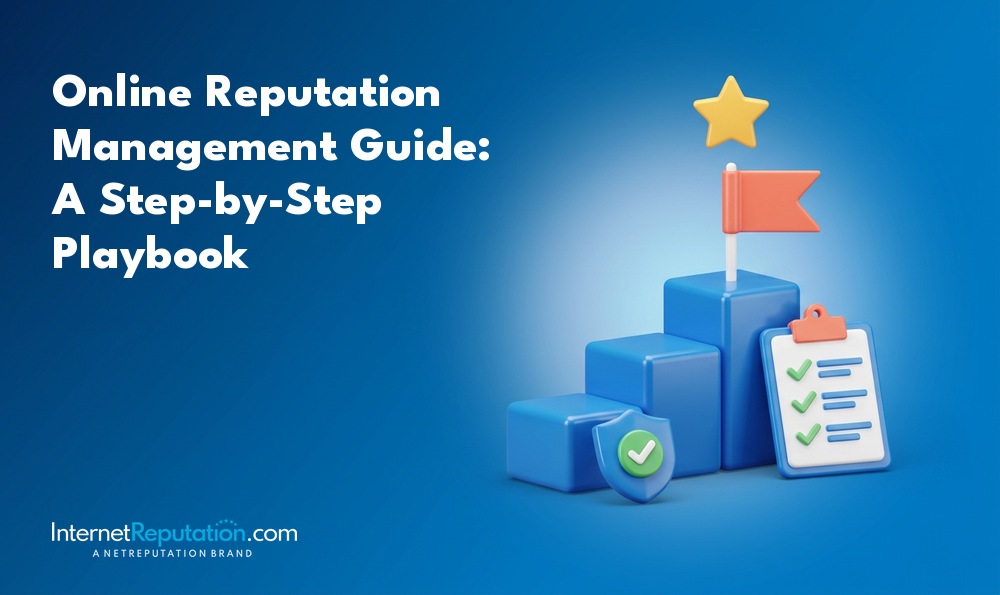
Your name or brand is being searched right now. What shows up in those results- reviews, news articles, social media posts, AI-generated answers- shapes whether someone decides to trust you, buy from you, hire you, or walk away. This guide breaks online reputation management into eight concrete steps that any business or individual can follow, starting today.
Key Takeaways
Online reputation management (ORM) is the practice of controlling and influencing how a business or individual is perceived online across search results, reviews, social media, news, forums, and AI answers. It applies to local businesses, executives, professionals, and private people. Effective ORM can inspire consumer confidence and foster loyalty over time, not just during a crisis.
The process starts with a clear audit of what already appears about you online, then moves into ongoing monitoring, building strong owned assets, managing reviews and customer feedback ethically, and consistently publishing positive content. 97% of people learn about local businesses online, so ignoring your online reputation is like handing someone else control of your story.
You can’t always delete negative reviews and feedback. But you can address them, balance them, or push them down with better content and a better customer experience. Google reviews, local SEO, and customer opinions are now primary decision drivers for buyers, employers, and partners.
Here are the eight steps covered in this guide:
- Audit your current online reputation
- Set up ongoing monitoring and alerts
- Claim and strengthen your owned assets
- Manage reviews and customer feedback ethically
- Address negative content and search results
- Publish and promote positive content consistently
- Protect personal privacy and reduce data broker exposure
- Prepare a simple reputation crisis plan
What Is Online Reputation Management?
Online reputation management is the ongoing work of monitoring, shaping, and protecting what people see when they search your name, brand, or company online. It covers search engine results, online reviews, social media posts, news coverage, forum threads, data broker profiles, and AI-generated answers from tools like ChatGPT, Gemini, and Google AI Overviews.
ORM differs from classic public relations. PR focuses on short-term press cycles and media coverage. ORM focuses on long-term search visibility, customer feedback, and digital records that stay findable for years. The two overlap, but ORM focuses on what search engines and AI assistants show when someone types your name.
ORM is not about hiding the truth. It is about making accurate, balanced, up-to-date information easier to find than old, misleading, or unfair content. Transparency and authenticity in communication build trust in online reputation management.
Consider a local service business whose top Google result was a complaint posted on a consumer forum four years earlier. After claiming a Google Business Profile, responding to customer feedback, publishing fresh content, and gathering more positive reviews over about nine months, that complaint page dropped off the first page. The current top results now show a review-rich business listing and the company’s own website.
What Shapes Your Online Reputation Today
Your online reputation is everything that appears about you across the web, not just your website or LinkedIn profile. It includes content you create, content others create about you, and content AI tools synthesize from it, shaping your broader digital reputation and online presence.
Here are the major reputation sources:
- Search engine results. Google’s first page (web, images, and sometimes AI Overviews) acts as the “front page” of your brand reputation. First impressions form in seconds.
- Online reviews. Customer reviews on Google Reviews, Yelp, TripAdvisor, and industry-specific review sites affect both customer satisfaction and local SEO visibility. 85% of consumers trust online reviews as much as personal recommendations. Online reviews influence 66% of software buyers.
- News and media. Articles from news sites and trade publications rank well in search engines and shape public perception for years.
- Social media. Posts, comments, and conversations on platforms like Facebook, Instagram, X, and LinkedIn appear in search results and shape how people perceive a brand online.
- Forums and communities. Reddit, Quora, and niche forums contain threads that rank for brand and name queries. These online conversations can surface complaints or praise that you may not know exist.
- Data broker sites. People search sites publish personal details (addresses, relatives, ages) that can affect how someone is perceived online.
- AI assistants and summaries. AI tools now train and respond based on the open web. When Google AI Overviews appear, users click traditional links only about 8% of the time, compared to about 15% when no summary is shown. If negative or outdated content dominates your web presence, AI answers may repeat those themes until better signals emerge.

Step 1: Audit Your Current Online Reputation
Think of this as a 60-to-90-minute diagnostic. Regular audits of your digital footprint reveal how people perceive a brand or individual. You can complete this with a browser and a simple spreadsheet.
Search yourself thoroughly. Open an incognito window and search your personal name, company name, product names, and key staff names. Use Google, Bing, and DuckDuckGo. Log out of all accounts first so results are not personalized.
Add modifiers. Repeat searches with terms like “reviews,” “scam,” “complaints,” your city or state, and the current year. These surface hidden negative reviews, forum posts, or blog articles you might not otherwise see.
Check images. Open the Images tab in Google for your name and brand. Unflattering, outdated, or unrelated photos can shape early impressions before a visitor reads a single word.
Ask the AI. Open ChatGPT, Gemini, or another AI assistant and ask “Who is [your name]?” or “What is [your brand]?” Note any inaccurate, missing, or negative information in the response. AI answers reflect what dominates the web, so this test reveals your online image from a new angle.
Log everything. Create a spreadsheet with columns for each first-page result: URL, type (owned, neutral, negative), a short description, and action notes. Track this over weeks and months to measure progress.
Step 2: Set Up Ongoing Monitoring and Alerts
Monitoring is what turns a one-time audit into an ongoing online reputation management strategy. Continuous tracking with online reputation monitoring tools helps identify issues before they escalate.
- Google Alerts. Set up free alerts for your company name, executive names, product names, and common misspellings. You will receive email notifications when new content appears. Monitoring tools include Google Alerts and social listening software for broader coverage.
- Review notifications. Enable notifications on major review platforms (Google reviews, Yelp, industry portals) so negative feedback is never left unanswered for days. 53% of customers expect businesses to respond to negative reviews within a week.
- Forum checks. Schedule monthly manual checks of Reddit, Quora, and relevant niche forums for threads that mention your name or contain brand reputation discussions.
- Centralize the process. Route all monitoring mentions and notifications to a shared inbox or a simple internal process so responses to reviews, online comments, and news mentions are timely and consistent.
- Track sentiment trends. Watch whether you are getting more positive reviews or more negative reviews over time. Track star rating trends and recurring complaints. If the same issue keeps appearing, that is a signal to fix the underlying customer experience or product problem, not just respond to each review individually.
Social media monitoring and social listening tools give you visibility into social media conversations and brand mentions that might not show up in search results yet.
Step 3: Claim and Strengthen Your Owned Assets
Owned assets are the profiles and properties you control directly: your website, social accounts, business listings, and professional profiles. These are the foundation of any effective online reputation management strategy.
Website. Secure your primary domain name and build a straightforward website with up-to-date contact details, an About page, and customer-facing content. Consistency in messaging across platforms helps maintain a positive reputation.
Google Business Profile. Every eligible business should claim and complete its Google Business Profile with accurate NAP data (name, address, phone), business hours, photos, and a concise description using relevant local SEO terms. The highest-ranked local listings averaged 38 reviews, so a well-maintained profile also supports review collection.
Professional profiles. Individuals should build or update profiles on LinkedIn, industry association directories, and portfolio platforms. These pages rank well for name searches and help you control what people find first.
Social media accounts. Claim branded usernames on key social media platforms even if posting is minimal. This prevents impersonation and confusion. Your social media presence is part of your brand online whether you post weekly or not.
Set clear privacy settings on personal social accounts and keep your private life separate from your professional presence. Make sure search results reflect the online image you want employers, clients, or partners to see.

Step 4: Manage Reviews and Customer Feedback Ethically
Reviews are often the most visible and trusted form of customer feedback. They shape customer relationships, search visibility, and how potential customers perceive your business’s online reputation. Because reviews are central to online reputation management for businesses, they influence 85% of consumers’ purchasing decisions.
Asking for Reviews the Right Way
Actively soliciting positive reviews strengthens a brand’s online reputation, but how you do it matters. 70% of customers will review a business when asked. Ask at natural moments: after a successful appointment, delivery, project completion, or service interaction. Do not filter by satisfaction. Ask all customers, not just the ones you expect to leave positive online reviews.
The FTC’s 2024 rule on fake reviews and testimonials (effective October 21, 2024) prohibits posting fake reviews, suppressing negative feedback, paying for positive reviews, and review gating (only asking satisfied customers to leave feedback). Legal guidelines advise against manipulating public perception or using fake reviews. Violations can result in civil penalties.
Responding to Reviews
Companies that respond to feedback earn the trust of 87% of customers. Response time to reviews affects perceptions of accountability and customer care. 53% of customers expect responses to negative reviews within a week. 19% of consumers expect a same-day response to their review. Companies should aim to respond to negative feedback within three days.
For positive reviews: Thank the customer and include a specific detail showing you read their comment. This builds customer loyalty and encourages others to leave positive reviews.
For negative reviews, follow three steps:
- Acknowledge the concern and apologize briefly.
- State one concrete step you are taking to fix the issue.
- Invite the customer to continue the conversation offline (phone, email) when appropriate.
39% of customers leave negative feedback in exchange for an apology. Responding to reviews can improve local search rankings and overall customer trust.
Thank customers for their reviews, positive or negative. Positive reviews boost your brand’s reputation and influence potential buyers.
Reporting Policy Violations
If a review contains hate speech, personal threats, or unrelated content, report it through the platform’s policy violation tools. Removal is never guaranteed; platforms make their own decisions.
Step 5: Address Negative Content and Search Results
Everyone faces some negative content eventually. The goal is to reduce its impact through a mix of removal requests, de-indexing, suppression, and, when needed, professional online reputation management services. Handling criticism effectively can mitigate reputational damage.
Removal Paths
- Platform reporting. Most review sites and social media platforms let you flag content that violates their policies. Submit reports with specific policy references.
- Privacy tools. Google offers personal information removal forms for content that exposes private data. Other search engines have similar processes.
- Legal routes. When content crosses into defamation, copyright infringement, or other legal violations, consult with an attorney. Legal removal requests require proper documentation.
Outdated Content
If a page no longer reflects current facts (a resolved lawsuit, a corrected error, a closed complaint), it may qualify for de-indexing through Google’s outdated content removal tool.
Suppression
When you can’t remove content, suppression is the next option. Publish and promote more relevant, helpful, and trustworthy content that can outrank old or unfair pages. This takes time. Industry estimates put the timeline at roughly six to nine months of consistent effort to push a firmly ranked negative URL off page one.
No one can guarantee removal of specific URLs from search. Never threaten or harass site owners, journalists, or reviewers. Stay factual and professional if requesting corrections or updates. Document every step taken (dates, links, communications) so you can track progress and show you acted reasonably.
Step 6: Publish and Promote Positive Content Consistently
This is the proactive heart of managing your online reputation. Consistently publishing positive content helps shape public perception and can deliver many of the business benefits of online reputation management. Positive digital assets dilute the impact of negative content over time.
Build a content plan. Include regular blog posts, FAQs, case studies, and how-to guides that answer real customer questions. Content tied to real customer needs supports both search engine optimization and customer satisfaction.
Collect social proof. Gather testimonials, detailed success stories, and interviews with existing customers or subject matter experts. User-generated content like testimonials strengthens social proof and builds credibility for potential customers.
Reuse positive signals. Feature positive reviews, media coverage, and positive news on your website and in proposal decks. Request permission where needed.
Share through owned channels. Distribute new content through email newsletters and social profiles so search engines see ongoing positive activity tied to the brand. Consistency in messaging across platforms reinforces a positive brand image.
Prioritize SEO to promote positive owned assets over negative results. Consistent, valuable content not only helps suppress negative search results but also improves the customer experience by answering questions before they become complaints.
Step 7: Protect Personal Privacy and Reduce Data Broker Exposure
Personal data scattered across data brokers and old accounts can lead to harassment, doxxing, or identity theft. This can quickly damage your online reputation, whether you are a business owner, executive, or private individual.
Data broker sites (people search sites) publish personal details like home addresses, relatives’ names, ages, and phone numbers. They pull from public records and resell this data. Both executives and private individuals should care about this exposure.
Opt out. Each broker has its own opt-out process. Visit the major ones, submit removal requests, and check back periodically. Records are often refreshed, so this is an ongoing task, not a one-time fix.
Audit old accounts. Review social media accounts, blogs, and forum profiles from years past. Tighten privacy settings or delete content that no longer reflects who you are today.
Account security basics:
- Use unique passwords for every account
- Enable multi-factor authentication
- Update recovery information (email, phone)
Stronger privacy and security make future ORM easier. Fewer sensitive details and weak accounts mean fewer vulnerabilities to exploit.

Step 8: Prepare a Simple Reputation Crisis Plan
A crisis can be anything that suddenly spikes negative reviews, press, or social attention: a viral complaint, a lawsuit filing, a data breach, or an executive misstep. Crisis communication is vital to manage reputation during negative events.
Define roles. Document in advance who is authorized to speak publicly for the brand, who approves statements, and how internal teams should route screenshots or links when something flares up.
Draft a holding statement. Write a short, neutral template that acknowledges awareness of an issue and states that more information will follow after facts are reviewed. This prevents silence from being interpreted as indifference.
Practice scenarios. Run through a basic drill once or twice a year. Simulate a surge of negative reviews after a service outage or a viral social media complaint. Teams that have practiced respond in hours, not days.
Track crisis metrics. During and after the event, monitor brand mention volume, changes in star ratings, and the tone of media coverage to understand the impact and measure recovery.
Honest communication and visible corrective actions reduce long-term damage more effectively than silence or defensiveness. Following best practices to avoid online reputation mistakes and allocating resources to customer service help the front line handle increased volume during a crisis.
How ORM Differs for Businesses vs. Individuals
The same principles apply to both groups, but priorities, channels, and risks differ.
Businesses focus on customer satisfaction, review volume, brand mentions, and local SEO to drive leads and revenue. A local service business facing a string of negative reviews needs to improve review responses, fix the underlying service issue, and build more positive reviews to improve its overall rating. Responding to reviews can increase customer trust by 87%.
Professionals and executives care more about what appears when people search their personal name. LinkedIn, speaking bios, industry news, and any negative press or complaints dominate their search results. Companies with strong employer branding receive twice as many applications, so an executive’s online presence also affects recruiting.
Private individuals may be less visible in search results, but old social media posts, court records, or viral content can still affect them. In small communities or specialized industries, a single negative search result can cause real harm.
Businesses should treat employee reviews and employer brand sites as part of their overall online business reputation management. Individuals should invest in professional profiles and thought leadership content to gain actionable insights about how they are perceived online.
DIY ORM vs Hiring Professional Help
When is managing your online reputation on your own realistic, and when does hiring a reputable online reputation management company make sense?
DIY works well when:
- You have a small number of negative reviews or a limited amount of negative content
- You have a few hours per month to monitor, respond, and publish
- The issues are straightforward (a few bad reviews, an outdated article)
Professional help makes sense when:
- Multiple negative news articles or coordinated smear campaigns exist
- Reputation issues are affecting major deals, job offers, or partnerships
- Complex removal, privacy, or legal questions are involved
- You need faster results than a solo effort can deliver
| Factor | DIY | Professional Help |
|---|---|---|
| Cost | Low (time only) | Higher (monthly retainer or project fee) |
| Time required | Several hours/month | Managed by the provider |
| Technical SEO skill | Self-taught | Specialized team |
| Complex removals | Limited | Experienced with legal and platform processes |
| Speed of results | Slower | Typically faster |
No reputable provider can guarantee removal of specific links from Google. Be wary of any “guaranteed deletion” promises, and compare different online reputation management tools and services carefully. InternetReputation.com is one example of a dedicated ORM provider focused on long-term reputation building and complex cases for businesses and individuals.
Common Online Reputation Management Mistakes to Avoid
How people respond often worsens brand reputation problems beyond the original issue.
- Arguing with reviewers in public. This turns a single complaint into a spectacle. Future customers read your response as much as the review itself.
- Posting fake reviews or asking staff and family to leave misleading feedback. This violates FTC rules and risks civil penalties. Platforms also detect patterns and may flag or remove the account entirely.
- Threatening legal action casually. Unless you have a genuine legal claim, threats backfire and often generate more negative attention.
- Deleting online comments or reviews that do not break platform rules. This triggers screenshots, reposting, and escalation.
- Ignoring negative feedback entirely. 97% of people learn about local businesses online. Silence signals that the business does not listen or improve. It erodes customer loyalty.
- Overreacting to every single negative review. Look for patterns instead. Recurring complaints reveal operational or service issues you can fix at the root.
Adopt a calm internal escalation process. Review responses before posting them on high-visibility platforms.
Quick Checklist: Managing Your Online Reputation Ongoing
Weekly:
- [ ] Check new reviews on Google, Yelp, and key review sites
- [ ] Respond to all customer feedback (positive and negative)
- [ ] Scan monitoring mentions for new brand mentions or press
- [ ] Log any recurring negative feedback themes
Monthly:
- [ ] Search your brand and key names in an incognito browser
- [ ] Review top-ranking pages and note any changes
- [ ] Update at least one owned asset with fresh content
- [ ] Review social media platforms for new online conversations
Quarterly:
- [ ] Revisit privacy settings on all accounts
- [ ] Re-run data broker opt-outs
- [ ] Review and update the crisis plan
- [ ] Assess whether star ratings and customer sentiment are trending up or down
- [ ] Assign each recurring task to a specific person or role
Steady, small ORM actions usually prevent emergency repairs after a reputation shock.
FAQ: Online Reputation Management
How long does it take to improve an online reputation?
Timelines vary. Small issues, like a handful of negative reviews, may improve with one to three months of consistent work. Serious problems involving news coverage, legal disputes, or high-authority negative content can take six to eighteen months.
Search engines take time to crawl and re-rank new positive content. Consistent publishing and engagement are more effective than one large push. Removal requests, privacy takedowns, and data broker opt-outs follow their own timelines, often taking weeks rather than days.
Measure progress by shifts in search results, star ratings, and customer inquiries, not by expecting every negative link to disappear.
Can I get all negative reviews and articles removed?
No one can honestly guarantee complete removal of all negative content. Search engines and publishers set their own policies and make their own decisions.
Removal is realistic when there are clear policy violations, personal data exposure, or proven defamation documented by legal counsel. In many cases, the most effective path is suppression and balance: creating enough positive, accurate content that negative items lose visibility and influence.
Be skeptical of any service that promises guaranteed deletion of specific URLs from Google in a fixed number of days.
How do AI tools like ChatGPT or Google AI Overviews affect my reputation?
AI tools generate answers based on patterns in web content. If negative or outdated material dominates search results, AI summaries will reflect those themes. When AI Overviews show up on Google, users click traditional links only about 8% of the time. That means the AI summary itself becomes the first and sometimes only impression.
Improving what appears on high-authority sites, reviews, and official profiles can gradually influence what AI systems say about a brand or individual. Periodically check AI answers about your name or company and log any inaccuracies for future content planning.
What should I do right after a viral complaint or PR crisis starts?
Gather facts from internal teams quickly. Confirm what actually happened before posting anything. Avoid guesses or emotional rebuttals.
Post a short, factual holding statement acknowledging the issue and promising a fuller update after review. Address directly affected customers, outline corrective actions, and update public communications as new verified information becomes available. Document the timeline, decisions, and customer responses so you can debrief the incident later and use it to strengthen the crisis plan.
How can a small local business manage reputation with limited time?
Start with a simple weekly routine: check Google reviews and one or two other key platforms, reply to all new feedback, and log any recurring issues. This takes less than an hour.
After visits, send a short follow-up email or text asking customers for honest reviews, without offering incentives or filtering out negative feedback. 70% of customers will review a business when asked. Update your Google Business Profile and website monthly with fresh photos, accurate hours, and at least one brief update.
Even one hour a week focused on reviews, local SEO, and customer feedback can steadily improve your brand’s reputation and attract new customers. For local businesses, this small investment compounds. Each positive review strengthens your online reputation and increases your brand’s visibility in search results.