Internet Defamation Removal: What You Need To Know
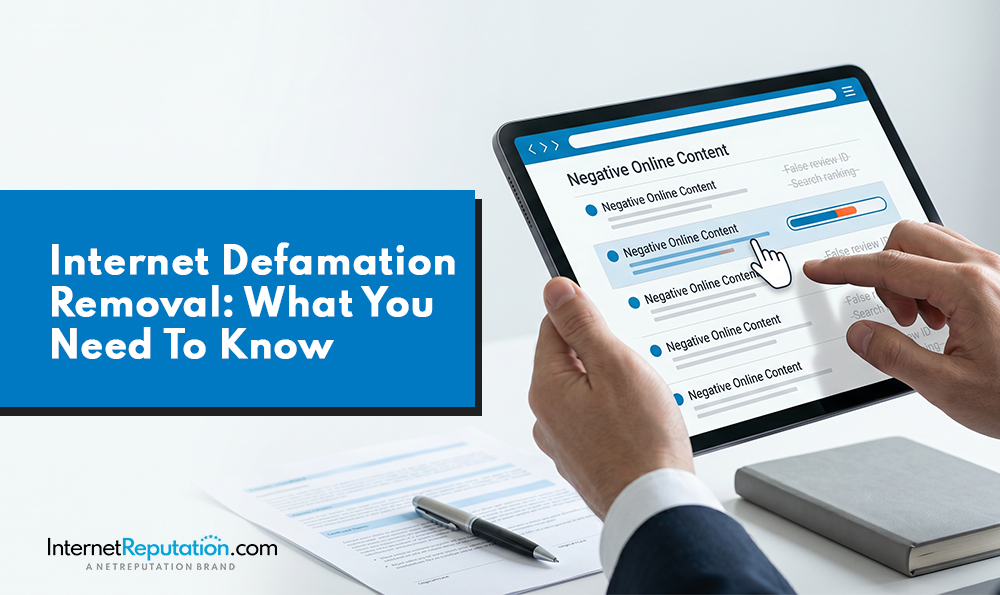
What makes the internet great is also what makes it terrible (and a target for internet defamation removal requests): it’s an open forum for information and ideas.
Because the internet is so unimaginably large, it is very difficult to monitor and manage. On top of that, the internet is often considered an extension of our First Amendment right to free speech. This means people have the right to express negative or even hurtful opinions about businesses or other people.
However, they do not have the right to intentionally say false things about a person or business. This is called libel or slander, depending on the circumstances — and both are types of defamation. Unfortunately, even if you have legitimate defamation claims, you’ll still have to deal with the fallout of your reputation.
Once defamatory posts exist on the internet, they’re extremely difficult to delete or fully remove. Even if you remove the original post, there could be shares, screenshots, archives, and other ways to view it.
That’s why you need to act fast if someone posts defamatory content about you online. The quicker you’re able to remove or bury the information, the less reputation damage you’ll suffer.
We can help you bounce back from false statements and defamatory content. Call us at 941-259-4554 for more information.
What Is Internet Defamation?
Internet defamation is the online posting or publication of a statement that is both verifiably false and harmful to your reputation. Defamation has two legal categories:
- Libel, which is written defamation
- Slander, which is spoken defamation
For instance, if someone posts on X that your flower shop is in cahoots with the mob, that’s libel. If they say the same thing in a YouTube video, it’s slander.
Is Google Responsible for Online Defamation?
Google is not legally responsible for anything that is posted to the internet. In cases of defamation, Google is the amplifier of the libel or slander, not the creator or perpetrator of it.
Search engines are just databases that index what’s on the internet, organizing it for relevancy and using algorithms to retrieve links based on what users search for.
The ultimate goal of Google is to provide you with the information you want in as few clicks as possible. Algorithms are what determine relevancy and achieve this goal. Relevancy is determined by factors like:
- Recency
- Keywords
- Authority
- Traffic and popularity
Let’s continue with the example from above. Someone went on social media and said that your flower shop is in cahoots with the mob. The post is not true, but it is juicy, which is why so many people are interested in it.
People share it with their social media followers. They take screenshots and create memes from them. There are discussions on Reddit about your flower shop, launching conspiracy theories. News outlets pick up the story, which attracts an even wider audience. In essence, the false statements about your business have now gone viral. And you have an SEO nightmare on your hands.
Google sees the recency, keywords, authority (CNN), and traffic of this content. Now your flower shop’s alleged involvement with the mob is front and center in Google results.
By this point, it’ll be impossible to have every single piece of defamatory content removed from the internet. Plus, even if you could, the damage to your reputation is done. Unless you create a new narrative, this fake one is what will persist in the minds of the public.
Should You Seek Legal Help for Removing Defamatory Material Online?

If you are the victim of defamatory statements, you are legally entitled to the removal of the content. In some cases, you may also be entitled to legal damages and financial compensation.
However, suing someone is a long legal process, even if you have an internet defamation lawyer on your side. Plus, throughout the process, your reputation will continue to suffer.
It can also be difficult to figure out who to bring a lawsuit against in the first place. Commonly, people post defamatory content anonymously to avoid legal trouble. This makes it very difficult to start the content removal process or build a legal case.
When you’re unable to figure out who’s responsible for posting the defamatory content, online reputation management (ORM) strategies may be your best bet.
Defamatory Content Removal Strategies

When defamatory reviews and other types of false, harmful content start to appear in search engine results, here’s how to move forward.
1. Identify the Content You Control
You control your social media accounts, blogs, and website. The first (and easiest) step is to delete defamatory comments and posts that are under your control.
Remember, you don’t have control over content like:
- News sites
- Wikipedia
- Blogs owned by someone else
- Another company’s or person’s social accounts
- Review sites
- Legal sites
- Public records
Your best bet with these types of publications is to ask politely for a removal, retraction, or amendment. Sometimes they will oblige. Other times, you have to be more direct.
2. Request Content Removal
Speak directly with the content creator or website owner and ask that they take down the post. If they don’t respond, you can have an attorney send them a formal request on letterhead, which is sometimes enough to get them to act.
Even if your content removal request doesn’t produce a direct result, it’s important that you show that you made efforts to have the content taken down. This will help you if you need to take the situation further.
3. Flag Content in Violation of Google’s Policies
You can flag content on Google if it violates its terms of service. For example, if the negative content includes your private information, like your Social Security number, it’s likely that Google will agree to de-index the result.
4. File a Defamation Lawsuit
If you know who is defaming you and they have refused to remove the content, you may be able to sue. However, filing a defamation lawsuit is usually a long and difficult process, as mentioned earlier. There is also no guarantee that all of the information will be removed or that your reputation will be repaired.
Remember the flower shop example above? A defamation lawsuit can only target the original content creator. It does not remove shares, Reddit threads, or any other public records associated with the defamation.
5. Invest in Online Reputation Management
Online defamation removal is a tedious and difficult task in most situations. And once something is in more than one place on the internet, it becomes borderline impossible to get rid of it completely.
Fortunately, there are still options open to you.
Remember the discussion about how Google algorithms work? Instead of fighting Google results, you can use those same principles to turn Google to your advantage. Using the right keywords and content strategy, you can bury negative Google results in a sea of positive content.
This is a familiar concept to those of us who work in PR. Often, fighting negative press makes us look guiltier. Think of the most recent celebrity scandal. We bet they denied the claims — that’s exactly why it’s stuck in your memory.
Instead, start building a wall of positive content around you as protection. Give searchers something positive to look at, and they’ll move on from your past drama pretty quickly.
Create the Positive Online Presence You Deserve
If you don’t have the time or the SEO know-how to perform an internet defamation content removal and reputation repair on your own, you can always hire a reputation management company.
As a leading reputation management firm, we specialize in combating negative Google results for both individuals and businesses.
Take control of your online reputation by speaking with one of our experts at 941-259-4554 today.