YouTube Apology Videos: Are They Effective?
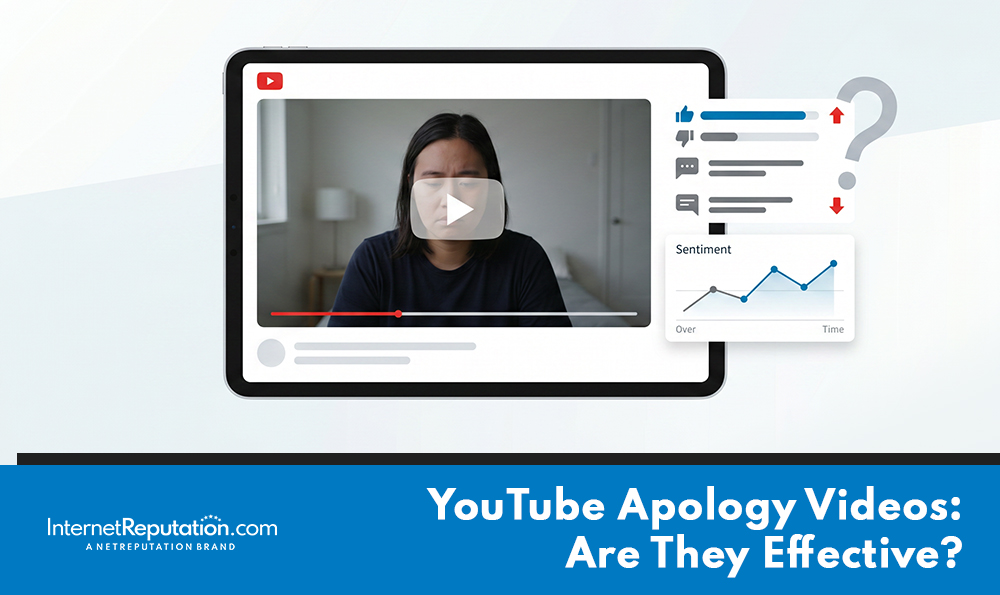
A YouTube apology video is a public video where a creator, celebrity, or influencer addresses a scandal or mistake. Whether it works has little to do with posting one at all. It depends on how authentic the apology feels.
This article breaks down the full story on when apology videos help repair an online reputation and when they make things worse. You’ll find the benefits and risks, what makes an apology feel sincere, real-world examples, and practical reputation-repair strategies.
Why Apology Videos Have Become So Common
Apology videos are one of the most popular crisis communication tools used by celebrities and influencers today. They offer a fast way to address a scandal and speak directly to an audience.
But apology videos are not always the right move. A poorly received apology can do more damage than the original scandal. Audiences have also grown skeptical. Many viewers now assume an apology on social media might not be sincere at all.
The Telltale Signs of a Fake Apology
The YouTube apology video has become its own genre, often shot like a stripped-down vlog. It follows a predictable format, sometimes opening with a casual “hey guys” before pivoting to something serious, and audiences recognize the pattern immediately. Here are some of the inauthentic details you might notice:
- The creator looks tired, wears minimal makeup, and appears more relatable, but the effect can still feel staged.
- The background and lighting change to make the video feel more raw or unscripted.
- The creator appears teary-eyed, may even cry on camera, or lets out a big sigh, even without actual tears, as a cue meant to signal sincerity.
These tactics tend to backfire. Viewers, guys and girls alike, often click away the moment an apology feels staged, rather than watching the whole video.
Not every apology video is inauthentic, though. Some feel genuine and succeed at repairing an image, even when they draw criticism from cancel culture. The difference comes down to sincerity, not production value.
How the Apology Video Trend Started
Apology videos are easy to find on YouTube, whether you’re watching on a computer or a phone. In this format, a creator addresses a scandal and tries to win back their audience’s trust.
The algorithm reinforces the pattern, which gives you a good idea of why these videos keep resurfacing. The more of these videos someone watches, the more YouTube tends to recommend. This matters because viewers under 15 spend more time on the platform than any other age group, which raises the stakes for how these videos land.
The genre has even inspired parody. In 2015, a YouTuber known as PBGGameplay posted a short, satirical apology on his channel for an error he made in a Super Mario video. That video has drawn over a million views, a sign of how recognizable the format has become.
Apology videos have grown steadily more common since the mid-2010s. Genuinely effective ones, though, remain rare.
Why a Sincere Apology Matters
Saying “I’m sorry” isn’t easy. Admitting fault can feel terrible, like it opens the door to more blame and criticism.
But if your actions hurt or offend someone, the goal isn’t to find the right words. It’s showing real accountability. A sincere apology can repair personal relationships and help rebuild a damaged online reputation.
A genuine apology offers real benefits:
- It gives the person you hurt a chance to restore their dignity.
- It opens the door to a conversation about what behavior was unacceptable, why people feel disappointed, and what repair looks like.
- It restores your own integrity in the eyes of others, which builds self-confidence.
Avoiding an apology carries real risk. It can damage relationships with family, friends, clients, and colleagues. It can limit personal and career opportunities. It can even hurt team morale, since no one wants to work for a leader who won’t own their mistakes.
Tips for Writing an Effective Apology
A few key habits separate an apology that works from one that backfires:
- Take full responsibility immediately, without excuses.
- Acknowledge the harm you caused, and keep the focus on the people affected, not yourself.
- Offer a solution that matches the severity of the situation and includes concrete next steps.
- Explain your plan for change clearly, and don’t ask for immediate forgiveness.
Turning off monetization on an apology video is another way to signal that you’re sincere and not profiting from the moment. Even so, expect the comments section to fill up with scrutiny either way.
How to Apologize After a Serious or Repeated Mistake
If you’re addressing something severe, or a repeated pattern rather than a single slip-up, start with the two words that matter most: “I’m sorry.” Authenticity is everything here, and audiences can tell when it’s missing.
From there:
- Take responsibility for what you did.
- Show real empathy for the people you affected.
- Offer a solution that fits the harm caused.
- Commit clearly to not repeating the mistake, instead of refusing to address the hardest questions.
This approach shows the apology isn’t just an act. It shows you understand what went wrong and that you’re changing your behavior. Addressing the issue quickly, rather than delaying, demonstrates reflection rather than damage control. It’s the clearest path to rebuilding trust.
Following through matters just as much as the apology itself. Viewers lose trust quickly when an apology is empty words rather than a genuine commitment. Failing to follow through can do even more damage to your reputation than the original mistake.
Logan Paul’s Apology: A Cautionary Example
One of the most widely publicized apology videos came from Logan Paul in 2018. It has drawn over 52 million views, a sign of how viral the backlash became. The video addressed his decision to post footage of a deceased person in Japan’s Aokigahara Forest, an incident that set off a firestorm across Twitter within hours. He eventually deleted the clip, but not before nearly every user on the platform had already seen it.
What made the apology land so poorly wasn’t just the original video. It took him nearly two minutes to actually say he was sorry. Many viewers saw this as part of a severe and continuous lapse in judgment, not a single mistake, and the rumors and accusations swirling around his behavior off camera only added fuel to the fight playing out online.
He promised to do better. A month later, though, he returned to regular posting and asked viewers to buy merchandise after YouTube restricted his AdSense account, a major revenue source for creators. That timing made the apology look more like damage control than genuine accountability.
The Bottom Line on Apology Videos
You can’t control how every viewer will react to your apology. Some won’t watch it at all, and that’s beyond your control. But on a platform as large as YouTube, your influence comes from the sheer number of people you reach, not from any single viewer. Even those who skip the video will likely hear about it.
An apology is only as effective as the intention behind it. Audiences around the world are quick to spot the difference between a performative apology and a genuine one, especially when cancel culture puts a story in the spotlight. A few notable examples show how differently these moments can play out. PewDiePie’s 2017 apology for using the N-word, Myka Stauffer’s apology for rehoming her adopted son, and Sam Pepper’s 2016 apology for filming inappropriate pranks were all heavily criticized. So was Colleen Ballinger’s 2023 apology, delivered as a sad song on a ukulele after accusations and rumors involving underage fans left many viewers disappointed and unwilling to extend her any grace. She’s continued to face backlash since. Fans filled the comments with the same complaint: the video felt more like an act than genuine talk about what went wrong, and it did little to put out the fire.
Done well, an apology video can humanize you, rebuild trust, and even strengthen your character over time. Done poorly, it can amplify criticism, damage your channel, and become a terrible chapter in your online history.
Before you hit record, take time to consider whether a public apology video is really the right move. If it is, resist the urge to chase sympathy, play the victim, hide behind excuses, or refuse accountability. Approach it with honesty, clarity, and a real plan for change. Reputation repair isn’t about one video. It’s about the actions that follow it.
Get Expert Help Protecting Your Reputation
If you’re facing a reputational challenge and aren’t sure how to respond, expert guidance can make a real difference. Internet Reputation helps individuals and businesses navigate high-stakes situations, craft effective responses, and rebuild trust online.
Call Internet Reputation today at 941-259-4554 to build a strategy that protects and strengthens your digital presence.